Please wait....

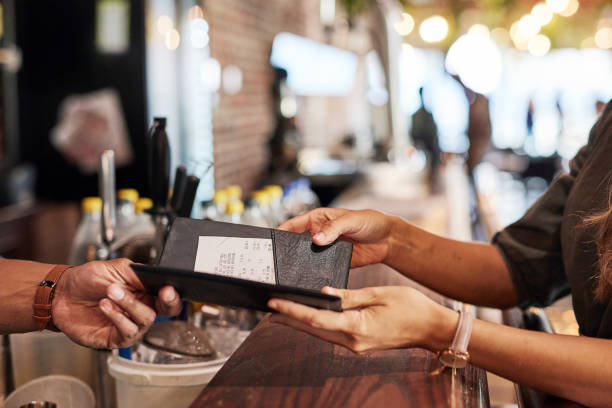
For decades, the standard, at least at a meal’s end, was to hold out a printed restaurant check in a brown leather folder for the customer. Now, progressive cafe owners, fine-dining managers and quick service restaurant (QSR) operators are waking up to the astounding benefits of going digital using online receipts.
In this mega article, we have discussed the various ways in which online receipts can turn around restaurant operations along with its implications on delivery aggregators and why going digital is the smartest investment you will make for your business.
In the past decades, a restaurant bill generation primarily utilized manual calculations over a piece of paper pad that got transformed into printed thermal receipt for POS system. Thermal printing was an improvement on handwritten notes, but it still depended a lot on physical supplies: in this case, paper rolls and ink.
An online restaurant invoice (or e-receipt) today is a digital document sent directly to customer’s smartphone via SMS, WhatsApp or email. It has all the exact same information that a traditional restaurant bill receipt does — items ordered, taxes, service charges and total amount — but it exists purely in the digital realm.
Over the past few years, restaurants have transitioned from a physical bill book restaurant bill generator online to complete billing system through cloud-based ecosystem enabling full digital integration of billing systems at every level completely and this phenomenal shift is not a mere gimmick but an upgrade that can transformative for customer satisfaction.
A new billing system digitizes the profits and losses that touch your restaurant in every dimension from customer service to backend accounting.
Printing physical receipts costs money. Take into account the cost of thermal paper rolls, printer maintenance, ink or toner, and daily electricity needed to keep these machines running all day long, and costs become prohibitive. Migrating to an online restaurant receipt system can save thousands of rupees a year for a busy restaurant that generates hundreds of bills each day.
Consumers today are much more environmentally conscious. Thermal receipt paper is notoriously hard to recycle due in part to the presence of chemicals like BPA (Bisphenol A) or BPS that coat it. By getting rid of the physical paper and transitioning from a restaurant bill printout to an online version, your business minimises its carbon footprint in seconds. A paperless restaurant also means an eco-friendly foodservice establishment, which you can use as a marketing tool to attract environmentally responsible diners.
Ever received a duplicate restaurant bill request from a customer because they lost the original and needed it for corporate reimbursement? Physical receipts are prone to fading, damage, and loss.
Digital receipts are delivered right to the customer’s phone or email, where they can be tucked away safely for eternity. Customers groan that they no longer have to shove paper inside their wallets. Plus, the checkout process is significantly faster when waitstaff are not waiting for a printer to whip out a receipt.
The digital restaurant bill receipt provides, perhaps the greatest benefit in terms of data collection. If a customer chooses to receive an e-receipt, they enter their phone or email address. This way your restaurant starts to create a solid Customer Relationship Management (CRM) database.
With this data, you can:
That means no manual billing, and no old-fashioned cash registers—both instances that allow for human error, and, sadly, employee theft. The moment you digitize your billing and use a bill book restaurant online, each transaction is saved in the cloud instantly. Once an invoice is generated and sent to a client's phone, it is next impossible to change it, as all parties (yours, your customers', and your accounting department) are completely transparent.
Food businesses are certainly not created equal, and neither are their billing needs. This is the beauty of digital billing systems — a customizable restaurant invoice template can always fit your specific brand identity and operational service requirements.
If you are a newcomer in a restaurant or if you want to keep software start-up costs low, there's a free bill format for restaurant online and waiters can immediately start sending quality digital invoices. Now let’s see how diverse food formats can personalize digital receipts:
A bill for pizza is a uniquely complicated matter. This should be clearly visible when the size of the pizza is mentioned(Regular, Medium, Large), crust (Thin crust, Cheese burst) chosen by customer including half-and-half modifications/extras Digital invoices handled these modifiers gracefully by including them neatly in a collapsible digital format which is easy on the eyes and won’t end up with a mile-long paper receipt.
In a busy cafe, speed is all that matters. In seconds, a coffee bill has to be generated. People getting a quick espresso on the way to work don’t want to wait for an inky piece of paper to print. An online receipt system lets the barista press a button and instantly text the receipt with unique milk preferences (oat milk, extra hot!) along with their digital stamp in a loyalty card that will bring them back.
Chai franchises and contemporary tea rooms are thriving in India. A tea bill generally has a lower ticket size. The amount of money spent on thermal paper for a ₹100 transaction ingests into the profit margins in a huge way. Digital receipts guarantee that even the smallest transactions are recorded and invoiced without incurring any of the overhead costs associated with printing.
The dine-in focus is a relic of the old restaurant ecosystem. While delivery aggregators do contribute a significant portion of revenue, they also add a layer of complexity in terms of billing and reconciliation.
Now you’re seeing why the Zomato Bill & Swiggy Bill is such a problem.
If your restaurant relies heavily on online orders, you may even be juggling several tablets and dashboards. What this meant previously was that restaurants had to print out a separate zomato bill/swiggy bill and then punch those numbers by hand in their main POS system every day to keep their daily sales accurate.
Today, digital receipt systems and smart POS software seamlessly connect with these third-party systems. As soon as an order arrives on Zomato, the digital zomato bill automatically gets created and sent over to your kitchen display system (KDS) as well as your cloud accounting software. For swiggy bill also the same rule.
Fixed costs of physical printing for delivery riders, errors in manual data entry and no more discrepancies on your GST calculations at the end of the month (regardless of the source of order) creates this centralized digital pipeline.
These steps may seem complex if you are still using a physical bill book, but do not worry about the transition to a digital system — it is worth every effort.
Essentially, a bill book restaurant online is accounting software on the cloud. Here’s why the switch is essential for modern food businesses:
As a proprietor, you can find out daily sales without even being at the restaurant. No problems if you open your laptop or smartphone anywhere in the world, and see all generated restaurant invoices from live data.
Reconciliation is a time-consuming task. The digital billing formats automatically calculate the exact tax according to item category, so you are always in compliance with the government rules.
The moment a digital restaurant bill is created, the system automatically removes the used raw materials from your digital inventory. It avoids overstocking and turns down the food waste.
Ready to make the jump? We’ll show you how to roll out digital receipts in your business step-by-step.
Research modern Point of Sale systems that mention the ability to send digital receipts (via SMS, WhatsApp and Email) specifically. Make sure it can sync directly with delivery partners.
Brand identity matters. Take a restaurant invoice template from your POS software and upload your restaurant logo, social media handles, or personalized Thank You message. Your GSTIN and FSSAI license numbers should be easily visible in the digital format.
Your waiters are going to be serving the customers. Train them to ask a customer for their phone number the right way. For instance, you might use: “Can I have your number?” * They should ask: “May I have your phone number, please, so I can send you your digital receipt and loyalty points?
If customers are reluctant to give up their contact information for a receipt of the digital restaurant bill, include a small incentive. Typically, a free dessert next time or an immediate 5% off today is sufficient to encourage adoption.
If you’ve begun to create digital bills, I’d encourage you to put the customer data capturing process to use. Leverage this information for focused SMS marketing campaigns, especially on lean weekdays or seasonal festivals.
Q: Do they have to send paper bills or is it legal to just send digital receipts?
Q: Is an electronic restaurant invoice valid for tax purposes?
Q: What happens if the internet isn’t working? How can I create an online receipt?
A: Most current POS systems are equipped with an offline mode. The transaction will be local, and once the internet recedes, this digital restaurant receipt goes by itself into the customer’s phone.
Q: If I am a beginner, can I use a free bill format for restaurant operations?
A: Absolutely. Many free tools and mobile apps exist that can help you generate a free restaurant bill format. These are good for popups or very small cafes, but as you scale you want to invest in a full dedicated system for better integration with aggregators and inventory tracking.
The messy, ink-stained paper bill era is rapidly drawing to a close. Adopting online receipts saves your restaurant trees, time, and money — while drastically reducing overhead costs.
Whether you configure a custom restaurant invoice template with brand kit that stands out, manage complex pizza bill from multiple service providers or just quickly fire off coffee bill / tea bill or even integrate zomato bill and swiggy bill regularly end users find it so much convenient that this is ultimate growth hack.
Now how does going online as a bill book restaurant helps you —You get data-driven insights and a direct line of marketing to your customers. Let’s bring your restaurant bill receipt process to the next level — give your diners a tech-forward and seamless checkout experience.
 100% satisfaction guaranteed. Secure payment methods available.